Caring for original fir floors in a hundred-year-old house
Old-growth fir is softer than oak, the finish is usually the weak point, and the most common mistake is a mop that is too wet.
By Marisol Aguilar-Reyes. Published .
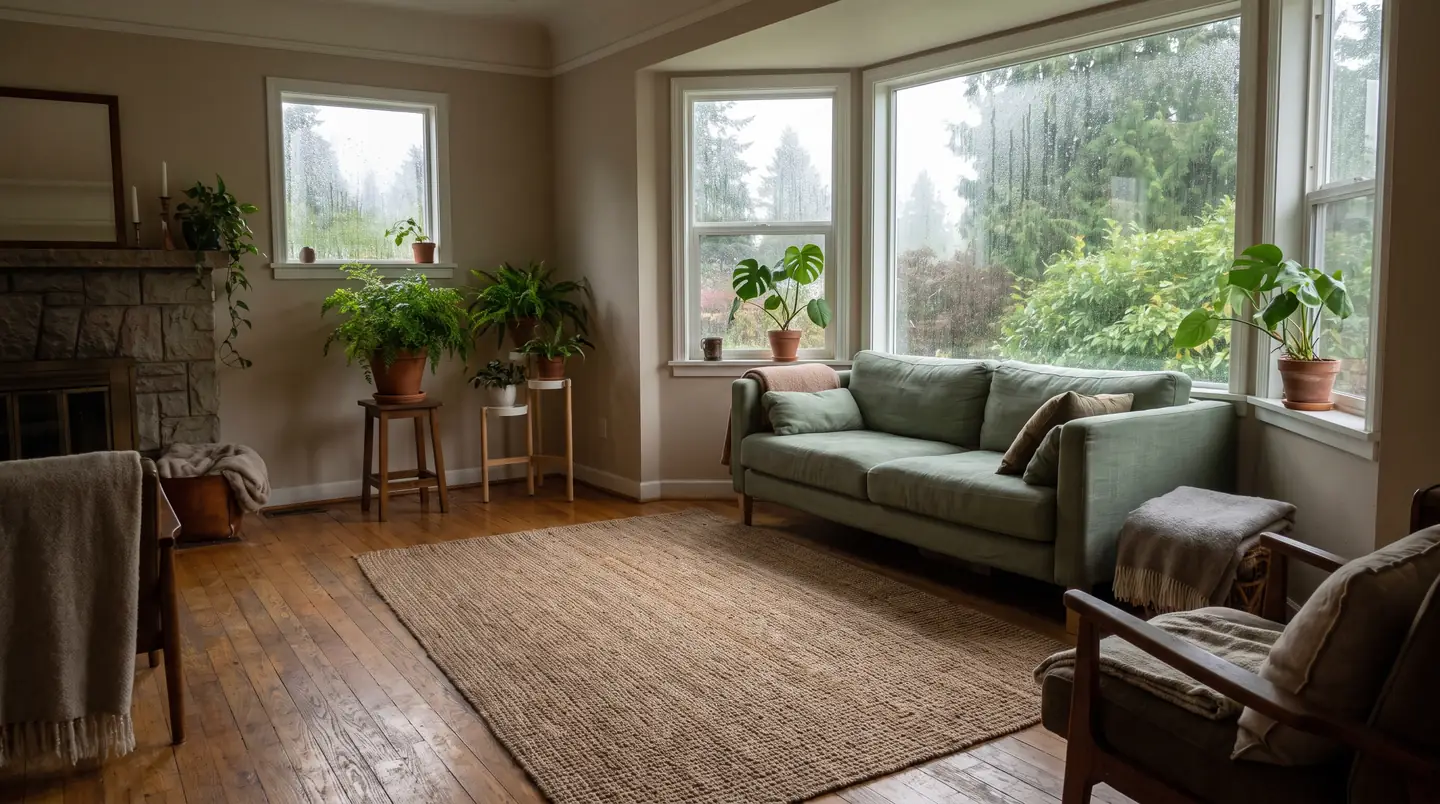
A great many Portland houses still have their original floors, and in the ones built before about 1940 that usually means old-growth Douglas fir. It is a beautiful floor and it is softer than people expect. Most of the damage we see was done with good intentions and a wet mop.
The finish is the floor, as far as cleaning goes
You are almost never cleaning wood. You are cleaning whatever is on top of it, and on a hundred-year-old floor that could be modern polyurethane, an older oil-based varnish, shellac, penetrating oil, wax over any of the above, or a traffic lane where all of it has worn through.
The same mop that is fine on cured polyurethane will cloud shellac, strip wax and push water into bare grain. That is why the first thing we do on an unfamiliar floor is test a patch somewhere nobody looks, usually inside a closet doorway.
A rough field test
- Put a drop of water on the floor in a hidden spot. If it beads and sits, the finish is intact. If it darkens the wood within a minute or two, the finish is worn or absent there.
- Rub an inconspicuous patch with a cloth barely damp with denatured alcohol. If it gets tacky, it is likely shellac, and it wants very little moisture indeed.
- Scrape a hidden corner gently with a fingernail. A waxy residue means wax, which means no water-based cleaner without a conversation first.
The four mistakes
Too much water. This is the big one. Wood moves with moisture, and a soaked mop pushes water into the seams between boards where it swells the edges. That is what cupping is: the board edges rising because they absorbed more than the middle. A mop should be wrung until it is barely damp and the floor should look dry within a minute of the pass.
Steam. Steam mops are marketed for hardwood and should not be used on it. They combine heat and moisture, which is precisely the pair of things a wood floor's finish and glue lines are least able to cope with. Many flooring manufacturers void warranties over it.
Vinegar, used routinely. Acetic acid will dull a polyurethane finish over time and can etch some older finishes outright. It is not a wood floor cleaner, whatever the internet says. A pH-neutral cleaner is the right tool.
Skipping the vacuum. Grit is an abrasive. Mopping a gritty floor is sanding it slowly with your own mop. Vacuum first, every time, along the boards rather than across them.
What we actually do
- Sealed HEPA vacuum first, with the hard floor head, running along the grain so grit does not get pushed into the seams.
- A pH-neutral cleaner with a plant-derived surfactant at low concentration, on a microfibre flat mop wrung nearly dry.
- Work in sections, and go back over anything still visibly wet with a dry side of the pad.
- On a worn traffic lane, we stop mopping altogether and vacuum more instead. Nobody wants a stripe of dark grain across their hallway in two years.
- Nothing acidic, nothing oily, no polish or restorer. Those are a refinisher's decision, not a cleaner's.
Two things worth doing yourself
Felt pads under every piece of furniture that moves, replaced when they get gritty, because a grit-loaded pad is worse than no pad. And a decent doormat at each entrance, which in a city with this much rain and grit does more for a floor's lifespan than any product you can buy for it.
If your floors are original and you would like somebody to look at them before touching them,that is what the walkthrough is for.

Want this applied to your house?
A walkthrough is twenty minutes and ends with a written plan and a fixed price. If the answer is that you do not need us, you will get that instead.