Top down
Dust falls. Working high to low means nothing lands on a surface that has already been done, which is why a room cleaned in the wrong order needs doing twice.
Change the palette, the type and the name. Everything on the page follows, and the address bar keeps your version so you can send it to somebody.
Four ways we work in a home, priced by rooms and condition rather than by guesswork.
What we change when someone in the house reacts to scent, dust or residue.
Who turns up, where we work, and what we have written down about the trade.
Book a first visit, ask a question, or read the answers we give most often.
Kitchen, bathroom, bedrooms, living. Each room has its own products, its own cloth colour and its own order of work. Here is all of it.
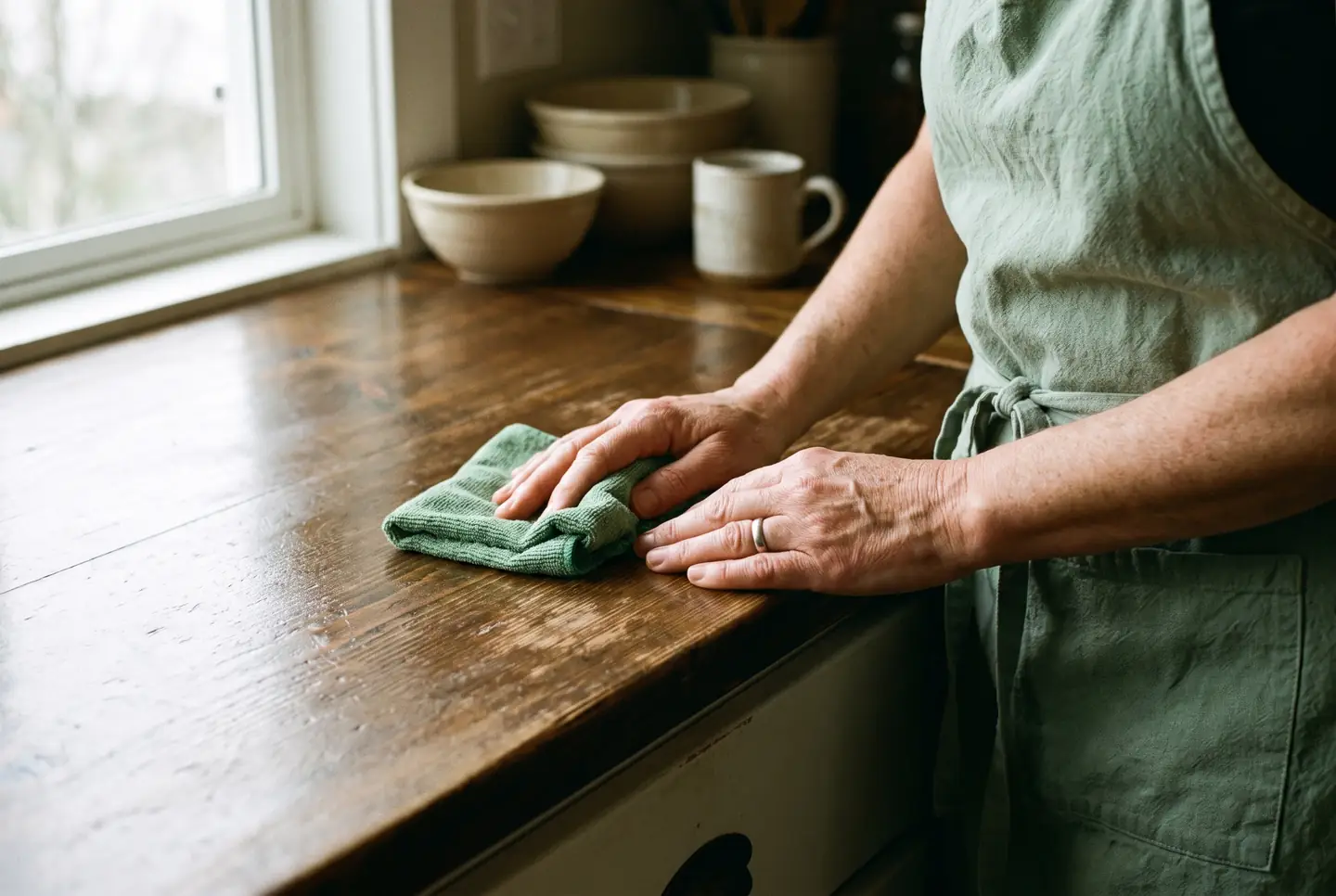
Dust falls. Working high to low means nothing lands on a surface that has already been done, which is why a room cleaned in the wrong order needs doing twice.
Dust dry first, then wet-clean. Spraying a dusty surface makes mud, and mud is what leaves the streaks people blame on the product.
Each zone finishes in its bathroom, with red and yellow cloths that never leave the room. Nothing travels from a toilet to a counter, ever.
Where the grease is, and where cross-contamination matters most
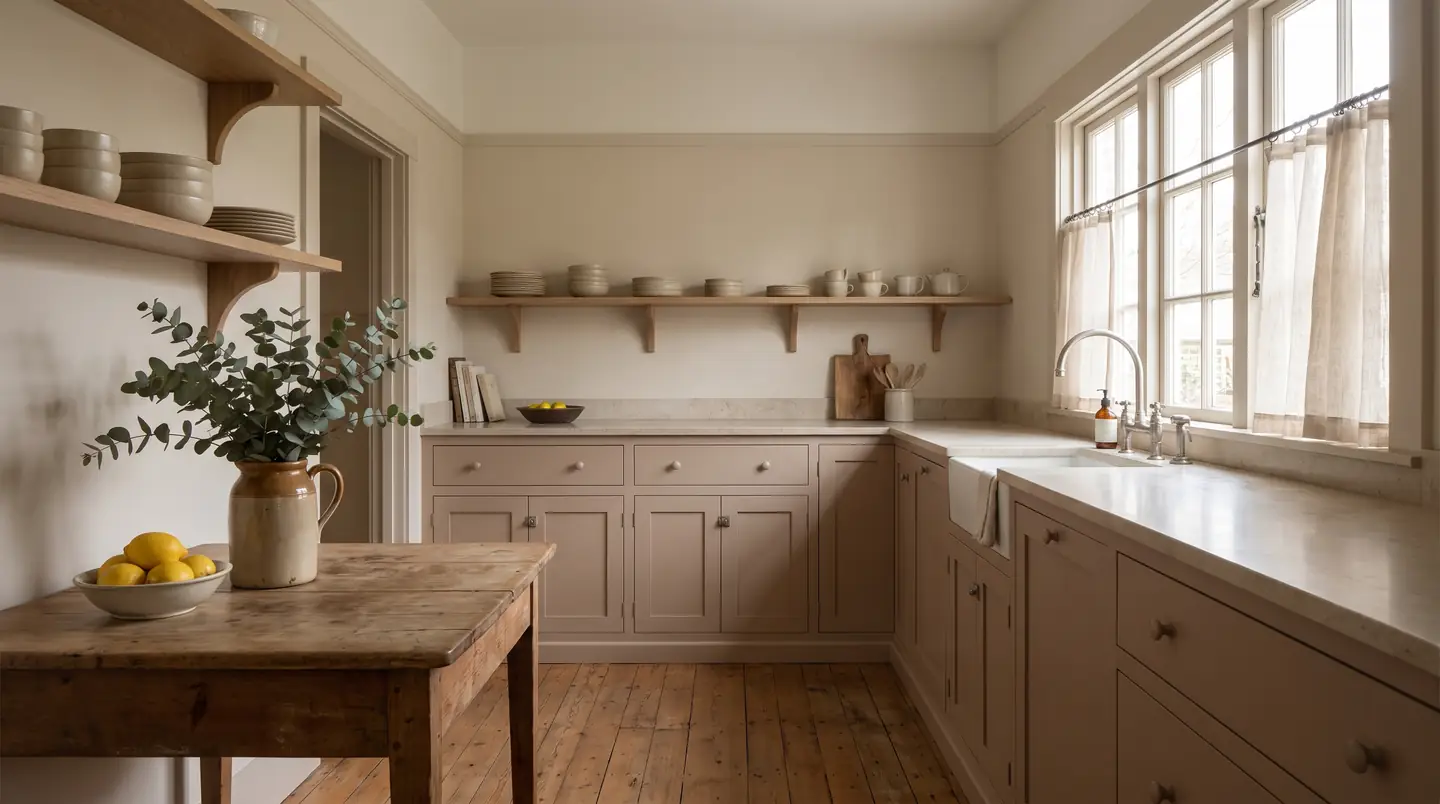
The kitchen is cleaned green, start to finish, and nothing that has been in a bathroom comes near it. Surfactant and friction do the work on grease. Food-contact surfaces are washed and then rinsed with clean water, because a residue you eat off is worse than the soil it replaced.
In a Portland house. In a Portland kitchen the usual surprise is the window frame. Winter condensation on single glazing feeds mould in the corner of the sash, and it wipes off far more easily at week two than at month six.
The room with its own cloths, its own order and its own chemistry
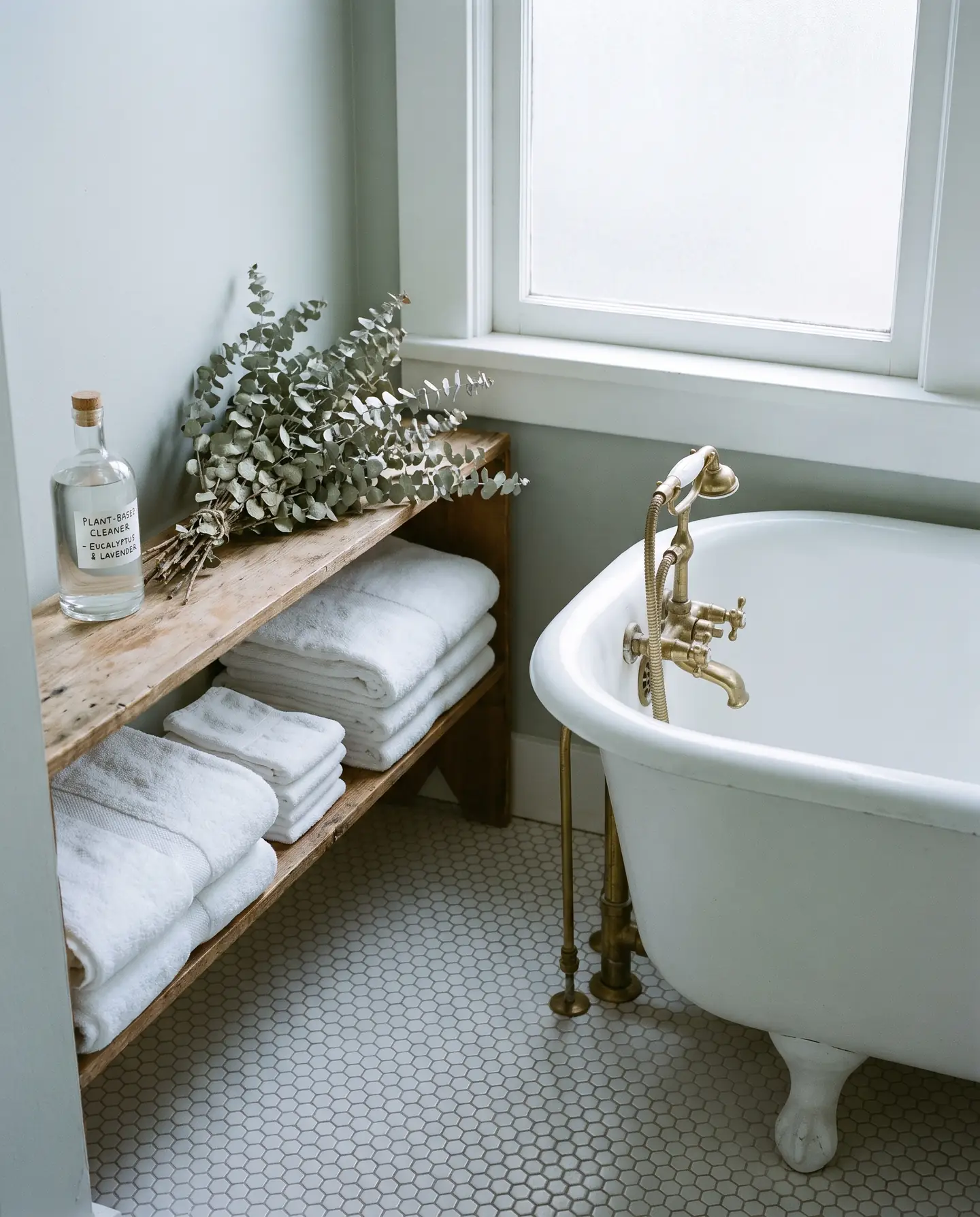
Bathrooms are done last in each zone, with red cloths for the toilet and yellow for everything else. Red never touches anything but the toilet, and neither colour leaves the room. Scale comes off with a citric and lactic acid descaler rather than anything chlorinated.
In a Portland house. Between October and April a Portland bathroom is damp for months at a time. The single most useful thing we do here is clean and check the extractor fan cover, because a blocked fan is the difference between a bathroom that dries and one that grows.
Eight hours a night of breathing whatever is in the air
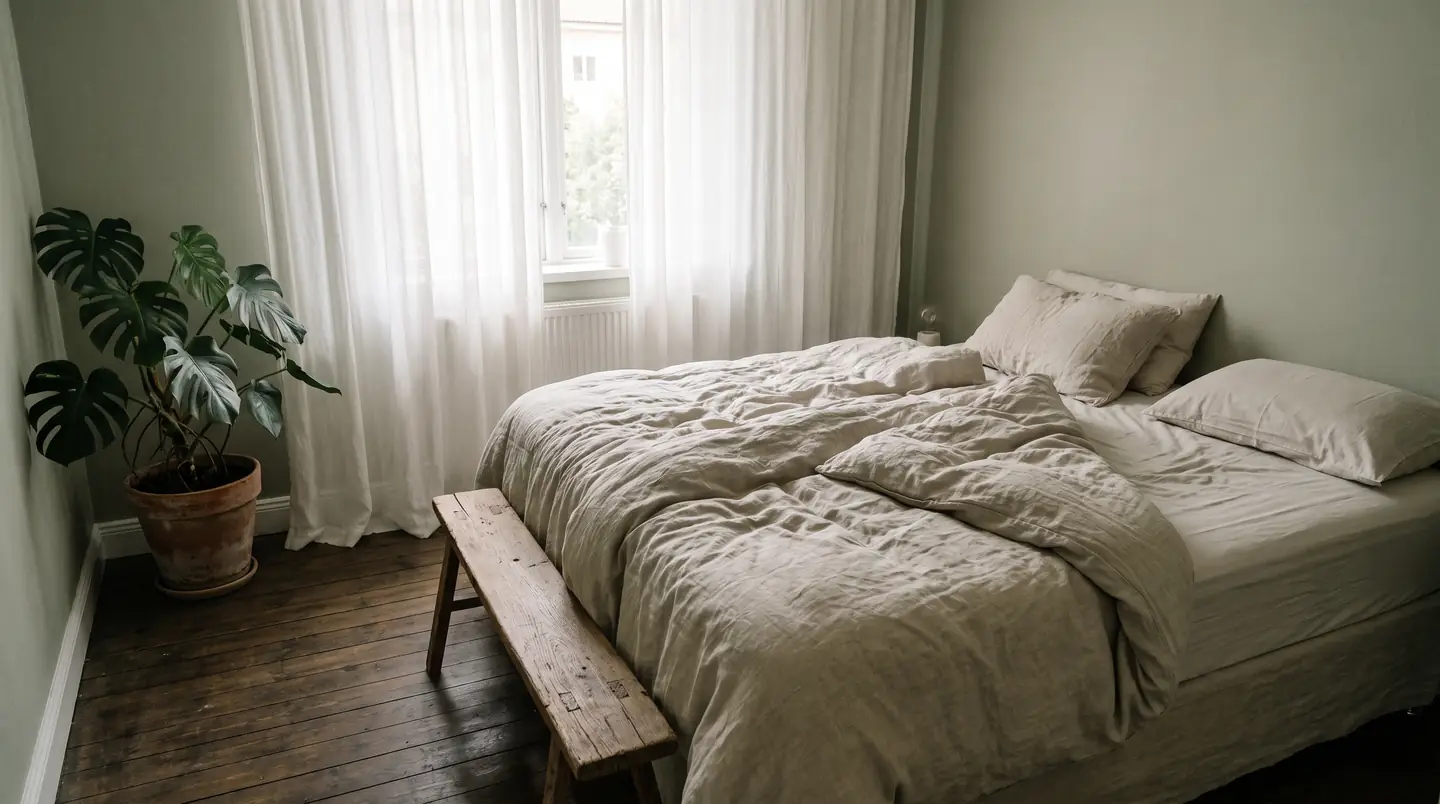
Bedrooms are about dust, not dirt. Dusting runs high to low so nothing lands on a surface already done, and the vacuum is a sealed HEPA machine so what it picks up does not come back out of the exhaust. Fragrance-free is the default here even for clients who like scent elsewhere.
In a Portland house. Alder pollen starts in February here and grass follows in May, and both find their way onto sills and into carpet. In pollen season we add sills and window tracks to the bedroom rotation without being asked.
Original floors, and the traffic that wears them
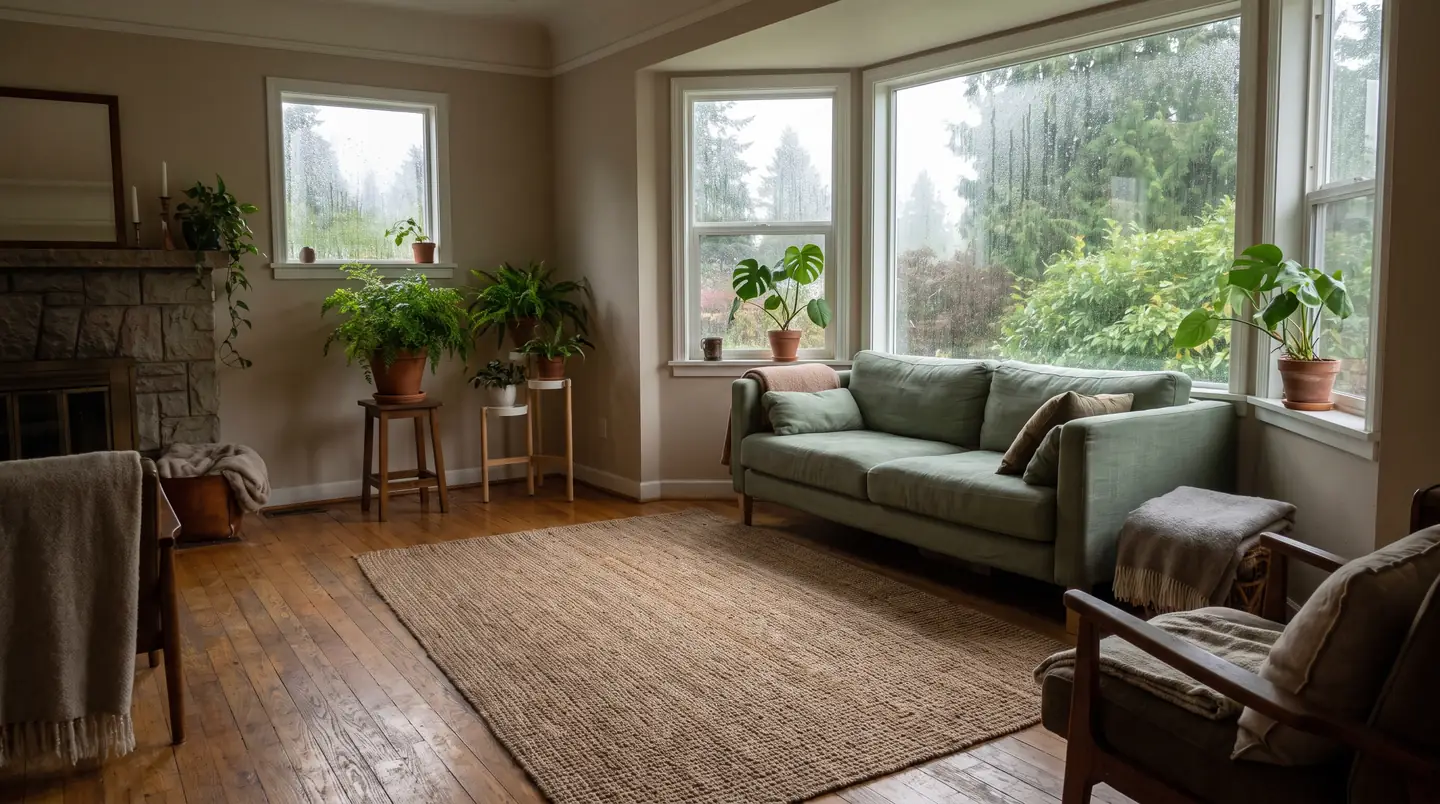
Most Portland living rooms have a hundred-year-old fir or oak floor with a finish that is somewhere between fine and tired. We test how the finish takes moisture before we mop, and if it is worn we vacuum more and wet less. Soft furnishings get vacuumed, not sprayed.
In a Portland house. If the floor is original and the finish is worn through in the traffic lane, we will say so and stop mopping that section. Pushing water into open grain is how a hundred-year-old board starts to cup.
A cleaning company that says yes to everything is a cleaning company that will do at least one of those things badly. We keep referrals for every item on this list.
Every checklist here is a starting point. Tell us what matters in your house and we will write the version we actually work to.